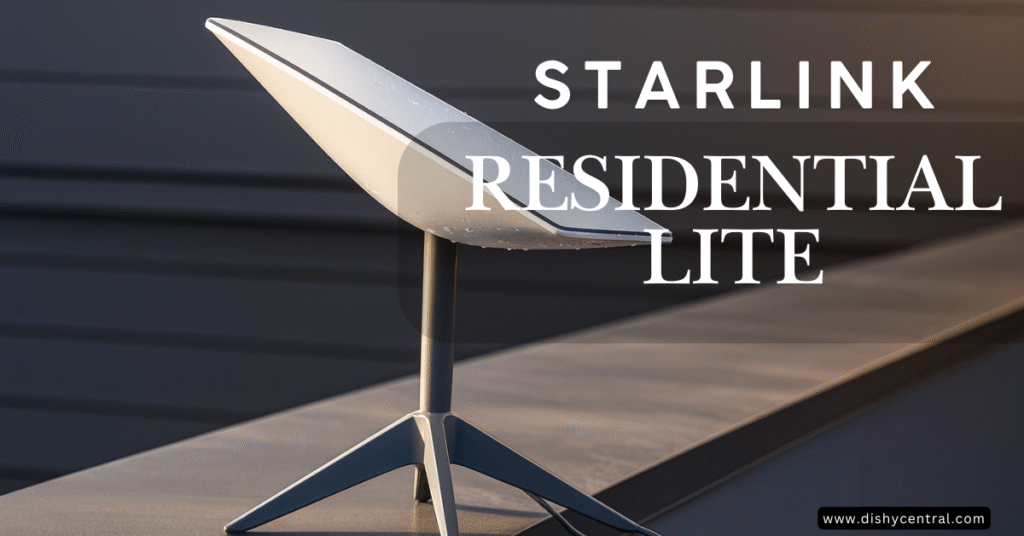
Choosing the right home internet service can feel overwhelming, especially if you live in a rural area where options are limited. If you’re exploring satellite internet service, you’ve probably heard about Starlink residential lite, SpaceX’s more affordable alternative to their standard residential plan.
At $80 per month, residential lite offers significant savings compared to the $120 standard residential service plan. But what exactly are you getting for that lower price? And more importantly, is the residential lite plan right for your household?
This guide breaks down everything you need to know about residential lite service, from speed and performance to availability and real-world usage. Whether they’re looking to save money or simply need basic internet for everyday tasks, this service plan might be the perfect solution.
Key Takeaways
- Residential Lite costs $80/month—$40 less than standard Residential—with 50-100 Mbps speeds and unlimited data
- Deprioritized during peak hours (6-11 PM), resulting in slower speeds when networks are congested
- Available in select areas with excess capacity, primarily less densely populated regions
- Best for 1-2 person households with light to moderate usage
- Unlimited data with no caps or overage fees
- Equipment costs $349 (Standard Kit) for both Residential and Residential Lite
- Switch between plans anytime with no fees; changes take effect next billing cycle
- Off-peak speeds often exceed 100 Mbps, ideal for daytime users
The Key Differences: Residential Lite vs. Standard Residential
Before writing about residential lite, let’s understand what makes it different from Starlink’s standard residential service. The primary distinction comes down to network priority and speed.
Residential Lite is available across select areas where Starlink has excess network capacity. According to starlink.com, the service launched initially in 14 states but has since expanded to cover most of Michigan, Ohio, New York, and parts of the eastern United States. The map showing availability continues to grow as SpaceX adds more satellites to its constellation.
Standard residential offers typical download speeds ranging from 150 to 250 Mbps, while residential lite delivers between 50 and 100 Mbps. Both plans have unlimited data, no caps, and no limits on how much you can stream or download each month. However, there’s an important caveat: residential lite service is deprioritized compared to residential service during peak hours.
What does deprioritized data mean for you? During times when the network has the most users online, typically between 6 PM and 11 PM, residential lite subscribers can experience slower speeds compared to standard residential customers. Think of it like a highway: when traffic is light, everyone moves at the same speed. But during rush hour, some lanes get priority access while others congest more easily.
| Feature | Residential Lite | Standard Residential |
| Monthly Price | $80 | $120 |
| Download Speeds | 50-100 Mbps | 150-250 Mbps |
| Data Cap | Unlimited Data | Unlimited Data |
| Network Priority | Deprioritized during peak hours | Standard priority |
| Equipment Cost | $349 (Standard Kit) | $349 (Standard Kit) |
| Availability | Select areas only | Most US locations |
| Best For | 1-2 person households, light users | Larger families, heavy users |
| Contract Length | No contract | No contract |
Speed and Performance: What to Expect From Residential Lite
Let’s talk about what really matters: how fast is residential lite in real-world use? The advertised speeds of 50 to 100 Mbps might sound modest compared to the standard residential tier, but for most households, it’s more than enough.
To put this in perspective, Netflix recommends just 15 Mbps to stream 4K video. With typical download speeds in the 50-100 Mbps range, a residential lite service plan can easily handle multiple devices streaming simultaneously. You can work from home, your kids can attend online classes, and someone else can stream their favorite show—all at the same time.
The download speeds you experience depend largely on two factors: network congestion in your area and the time of day. During off-peak hours (roughly midnight through 5 PM), many residential lite users report speeds approaching or even exceeding 100 Mbps. Some subscriber reports show speeds reaching 200 Mbps during periods when few users are online.
However, peak hours present a different story. Between 6 PM and 11 PM, when most people are home and online, the deprioritized data allocation means slower speeds are possible. In congested areas with many Starlink users, residential lite subscribers might see their download rates drop to 30-50 Mbps during this window.
Understanding Deprioritization and Network Management
The concept of deprioritized data might seem confusing at first. Think of Starlink’s satellite internet constellation as a shared resource—bandwidth must be distributed fairly among all subscribers.
When you sign up for residential lite, you’re accepting that your connection will be given lower priority compared to residential service during peak hours. This doesn’t mean you’ll experience constant interruptions or unusable speeds. Instead, it means that during times of network congestion, residential service plan subscribers get first access to available bandwidth.
For most everyday activities, checking email, browsing social media, streaming music, or even watching HD video, the difference between residential and residential lite is minimal. Where you’ll notice the gap is with high-bandwidth activities during busy evening hours: large file downloads, gaming with very low latency requirements, or streaming multiple 4K videos simultaneously.
Pricing Breakdown: Is Residential Lite Worth the $40 Savings?
At $80 per month, residential lite is 40 less than the standard $120 residential plan, a 33% discount that adds up quickly. Over a year, choosing residential lite saves you $480 compared to the standard residential service plan.
The upfront equipment cost remains the same for both plans. The Standard Starlink kit costs $349, though SpaceX frequently offers regional discounts. In select areas, you might find the hardware reduced to $249 or even cheaper—$149 in regions where Starlink is actively working to expand coverage.
SpaceX has also introduced an even cheaper option called the residential 100mbps plan in select locations. This tier costs just $40 per month but caps your download rates to 100mbps. It’s designed for heavy users who don’t need maximum speeds but want reliable satellite internet at the lowest possible price.
| Cost Component | Residential Lite | Residential |
| Monthly Service Fee | $80 | $120 |
| Standard Kit (One-time) | $349 | $349 |
| First Year Total Cost | $1,309 | $1,789 |
| Annual Savings (Years 2+) | $480/year saved | – |
| Contract Requirements | None | None |
One major advantage of both residential lite and standard residential plans: no long-term contracts. You’re not locked into a year-long commitment, which means you can try the service risk-free. Starlink even offers a 30-day trial period, allowing you to test whether residential lite meets your household’s needs.
Hidden Costs and Additional Fees
Most Starlink subscribers find the pricing straightforward, but there are a few potential additional costs to be aware of:
Shipping and handling: Expect to pay around $20-30 for shipping when ordering your equipment.
Optional accessories: If you need a longer cable, pole mount, or Ethernet adapter, these add-ons cost extra. Most households can use the standard setup without purchasing accessories.
Portability fees: If you want to use your residential lite service temporarily at a different location, you’ll need to add roam unlimited services to your account, which increases your monthly cost significantly.
Availability: Where Can You Get Residential Lite?
Unlike standard residential service, which is available nationwide (except in “sold out” zones), residential lite is available only in select regions. When SpaceX first launched the residential lite service plan in early 2025, it was limited to just 14 states—primarily in the Midwest, Mountain West, and parts of New England.
The good news? Residential lite is available across significantly more areas now. Recent coverage expansions mean most of Michigan, Ohio, and New York now have access, along with major portions of Florida, North Carolina, Virginia, and parts of the eastern United States.
Starlink Residential lite – Availability Map
Current Availability List
New England
- Maine
- Vermont
- New Hampshire
Upper Midwest
- Minnesota
- Iowa
- Wisconsin
Great Plains
- North Dakota
- South Dakota
- Nebraska
- Kansas
Mountain West
- Montana
- Wyoming
- Idaho
- Utah
- Nevada
Great Lakes & East
- Michigan
- Ohio
- New York
Southeast (Partial)
- Florida
- North Carolina
- Virginia
*Map represents general availability zones. Specific address eligibility may vary.
To check if residential lite is available at your address, visit the Starlink help center or enter your location directly at starlink.com. The website will show you which service plans are offered in your area and display any current hardware promotions.
Why Availability Is Limited (And Why That’s Changing)
You might wonder: if Starlink is available across the entire country, why is residential lite restricted to certain regions?
The answer comes down to network capacity. Starlink can only support a certain number of users in each coverage area before the network becomes too congested. In areas with excess capacity—typically less densely populated regions—SpaceX can offer the more affordable residential lite tier without degrading service quality for existing subscribers.
Bringing residential lite to congested areas wouldn’t make sense. If the network is already stretched thin, adding more subscribers at a lower price point would only overload the system further. That’s why SpaceX initially avoided parts of the eastern United States and other urban corridors.
However, as SpaceX continues launching more satellites—they’re now adding hundreds of new satellites to the constellation quarterly—network capacity steadily improves. This expansion allows them to offer residential lite in previously congested areas, which explains the recent availability increases.
Real-World Usage Scenarios: Who Should Choose Residential Lite?
Deciding between residential lite and standard residential comes down to your household’s internet usage patterns. Let’s look at specific scenarios to help you determine which service plan fits your needs.
Perfect Candidates for Residential Lite
Small households (1-2 people): If you live alone or with one other person, residential lite provides plenty of bandwidth for everyday activities. You can both work from home, stream shows, and browse the web without noticing performance limitations.
Light to moderate internet users: Do you mainly use the internet for email, social media, streaming music, and occasional video streaming? Residential Lite handles these activities effortlessly, even during peak hours.
Off-peak hour users: If your heaviest internet usage happens during the day or late at night—outside the 6-11 PM window—you’ll rarely experience the deprioritization effects. Remote workers who need reliable daytime connectivity find residential lite more than sufficient.
Budget-conscious households: The $40 monthly savings matters, especially for families already stretching their budget. Residential lite delivers reliable home internet at a more affordable price point than competitors like Viasat or traditional broadband in rural areas.
Vacation homes and secondary residences: If you need internet at a cabin, RV lot, or seasonal property where usage is sporadic and light, residential lite makes perfect economic sense.
When Standard Residential Makes More Sense
Some situations call for the higher-tier service despite the additional cost:
Larger families (4+ people): With multiple family members streaming, gaming, video calling, and downloading simultaneously, the standard residential plan ensures everyone gets the bandwidth they need during evening hours.
Heavy streaming households: If you regularly stream multiple 4K videos at once or maintain constant heavy usage, the prioritized bandwidth of standard residential provides a better experience.
Competitive gamers: Online gaming demands low latency and consistent speeds. While residential lite works fine for casual gaming, serious competitive players benefit from standard residential’s network priority during prime gaming hours.
Work from home with video conferencing: If your livelihood depends on crystal-clear video calls and large file transfers during business hours, the standard residential service plan offers peace of mind.
Activities and Expected Performance
| Activity | Required Speed | Residential Lite Performance |
| HD Video Streaming (1080p) | 5 Mbps | ✓ Excellent |
| 4K Video Streaming | 25 Mbps | ✓ Good (single stream) |
| Video Conferencing (Zoom, Teams) | 3-5 Mbps | ✓ Excellent |
| Online Gaming | 3-6 Mbps (low latency) | ⚠ Good (casual), Fair (competitive) |
| Large File Downloads | Varies | ⚠ Good (off-peak), Slower (peak) |
| Social Media & Web Browsing | 1-5 Mbps | ✓ Excellent |
| Multiple Devices (3-5 simultaneous) | 25-50 Mbps | ✓ Good |
Technical Specifications and Network Details
Understanding the technical side of Starlink helps you make an informed decision about whether residential lite meets your needs. Let’s dive into the specifics of how this satellite internet service works.
Latency and Connection Quality
One of Starlink’s biggest advantages over traditional satellite internet is latency, the time it takes for data to travel from your device to the server and back. Traditional satellite providers like HughesNet and Viasat rely on geostationary satellites positioned about 22,000 miles above Earth, resulting in a latency of 600+ milliseconds.
Starlink’s low-Earth orbit constellation operates at just 340 miles altitude, dramatically reducing latency to 25-60 milliseconds for most users. This makes residential Lite feel much more responsive than older satellite internet service options.
Both residential lite and standard residential plans benefit from this low latency. The deprioritization during peak hours primarily affects throughput (download speeds) rather than latency, so your internet connection still feels snappy even when speeds drop slightly.
Equipment and Installation
Whether you choose residential lite or standard residential, the equipment is identical. The Standard Starlink kit includes:
- Starlink dish (Gen 3 Standard): The rectangular antenna that communicates with satellites overhead
- WiFi router: Built-in router with mesh networking capabilities
- Power supply and cables: Everything needed to connect the system
- Mounting tripod: Basic ground mount included (wall/roof mounts sold separately)
Installation takes less than 30 minutes for most people. You simply place the dish with a clear view of the northern sky, plug in the power, and connect to the WiFi network using the Starlink app. The dish automatically aligns itself and finds the optimal satellite connection, no professional installer required.
The equipment is designed to withstand harsh weather. The dish can melt snow, operates in extreme temperatures from -22°F to 122°F, and handles heavy rain and wind without issue.
Switching Between Plans: Upgrading and Downgrading
One of the most flexible aspects of Starlink’s offerings is how easy it is to change your service plan. Existing subscribers can switch between residential and residential lite through their account dashboard or the Starlink app.
To downgrade from residential to residential lite (if it’s available in your area), log into your account and navigate to “Manage Subscription” → “Change Service Plan.” Select residential lite, and the new service will take effect from your next billing cycle. You’ll immediately start saving $40 per month.
Similarly, if you find residential lite doesn’t provide enough bandwidth during evening hours, you can upgrade to the standard residential plan anytime. The change processes at your next billing date, and there’s no fee for switching between residential service plans.
This flexibility is particularly valuable for households whose internet needs fluctuate. Maybe you work from home during certain months but not others, or perhaps your family size changes. The ability to adjust your service plan without penalties or contracts makes Starlink residential lite a low-risk choice.
How Residential Lite Compares to Other Internet Options
If you’re considering residential lite, you’re probably also looking at other internet providers. Here’s how SpaceX’s budget satellite internet stacks up against the competition.
Residential Lite vs. Traditional Satellite Internet (Viasat, HughesNet)
Compared to legacy satellite providers, residential lite is clearly superior in almost every category:
Speed: Viasat’s fastest residential plans max out around 100 Mbps (in theory), but real-world speeds are often 25-50 Mbps. HughesNet tops out at 50 Mbps. Residential Lite consistently delivers 50-100 Mbps, matching or exceeding these competitors.
Latency: This is where Starlink really shines. With latency under 60ms versus 600+ ms for traditional satellite internet, residential lite feels dramatically more responsive. Online gaming, video calls, and interactive applications work much better on Starlink.
Data caps: Many Viasat and HughesNet plans include data caps—typically 40-150 GB per month. After hitting your limit, speeds get throttled to unusable levels (1-3 Mbps). Residential Lite offers unlimited data with no hard caps, though you may experience slower speeds during congestion.
Residential Lite vs. 5G Home Internet
T-Mobile and Verizon’s 5G home internet services cost similar amounts ($50-70 per month) but are only available in areas with strong 5G coverage. If you can get 5G home internet, it’s generally faster and more consistent than residential lite.
However, most rural areas don’t have adequate 5G coverage yet. That’s where residential lite excels—it works virtually anywhere with a clear view of the sky, making it the best option for truly remote locations.
Residential Lite vs. DSL and Cable
If you have access to cable or fiber internet, those options typically offer better value than residential lite. Cable internet delivers higher speeds at similar or lower prices, and fiber is faster still.
But for the millions of Americans in rural areas without access to cable or fiber, residential lite represents a massive upgrade over DSL. DSL speeds rarely exceed 25 Mbps and often suffer from high latency and reliability issues. For these households, residential lite provides a modern, high-speed internet connection that was previously impossible to obtain at any price.
| Provider | Monthly Cost | Speed Range | Data Cap | Latency |
| Starlink Residential Lite | $80 | 50-100 Mbps | Unlimited | 25-60ms |
| Starlink Residential | $120 | 150-250 Mbps | Unlimited | 25-60ms |
| Viasat | $70-150 | 25-100 Mbps | 40-150 GB | 600+ms |
| HughesNet | $50-150 | 25-50 Mbps | 100-200 GB | 600+ms |
| T-Mobile 5G Home | $50-70 | 100-300 Mbps | Unlimited* | 30-50ms |
Customer Experiences and Reviews
What are real subscribers saying about residential lite? User feedback provides valuable insight into how the service performs in everyday situations.
Most residential lite customers express satisfaction with the service, particularly those who previously relied on DSL or had no internet at all. Common positive themes include:
Dramatic improvement over previous options: Many subscribers in rural areas report that residential lite transformed their internet experience. Activities that were impossible before—like video streaming or working from home—now work reliably.
Better value than expected: Several users note that the performance difference between residential and residential lite is smaller than they anticipated. Off-peak performance often matches or exceeds what they’d get on standard residential.
Reliable unlimited data: The freedom to stream, download, and use the internet without worrying about data caps receives consistent praise. After years of rationing data on capped plans, having an unlimited amount of data feels liberating.
However, some subscriber challenges emerge in the reviews:
Evening slowdowns: Users in areas with many Starlink customers report noticeable speed reductions during prime evening hours. While speeds remain usable, heavy activities like 4K streaming or large downloads work better during the daytime.
Weather sensitivity: While the equipment handles rain and snow well, some users experience brief connection drops during severe storms. This affects all Starlink plans, not just residential lite.
Limited availability frustration: Many potential customers want residential lite but can’t access it because it’s not offered in their area yet. This geographic restriction is a common complaint.
Future of Residential Lite: What’s Coming Next
As SpaceX continues expanding its satellite constellation, residential lite’s capabilities and availability will likely improve. Here’s what the future might hold:
Expanding Coverage
The recent expansion bringing residential lite to parts of the eastern United States demonstrates SpaceX’s commitment to growing this tier. As more satellites launch—SpaceX aims to expand the constellation to over 40,000 satellites eventually—network capacity in each region increases, allowing residential lite access in previously congested areas.
Next-Generation Satellites
SpaceX is developing V3 satellites with significantly more bandwidth per satellite. These improved spacecraft, expected to deploy starting in 2026, will provide 10x the capacity of current satellites. This means less network congestion, fewer periods of deprioritization, and potentially even better performance for residential lite subscribers.
Additional Budget Tiers
The introduction of the residential 100mbps plan at $40 per month suggests SpaceX is exploring additional price points. We might see more options emerge, giving subscribers greater flexibility to choose a service plan that perfectly matches their usage and budget.
Frequently Asked Questions
Can I upgrade from Residential Lite to standard Residential later?
Yes, subscribers can switch between service plans anytime through their Starlink account or the Starlink app. Navigate to “Manage Subscription” and select “Change Service Plan.” The upgrade takes effect at your next billing cycle with no penalties or fees. This flexibility allows you to start with residential lite and upgrade if you need more bandwidth.
Does Residential Lite work the same as Residential outside of peak hours?
During off-peak hours when network traffic is light, residential lite often performs very similarly to standard residential service. Many users report download speeds of 100+ Mbps during daytime hours and late at night. The primary performance difference occurs during peak evening hours when the network is most congested and prioritization comes into play.
What happens if Residential Lite becomes available in my area after I sign up for Residential?
Current residential subscribers can downgrade to residential lite once it becomes available at their address. Check your account periodically, as SpaceX frequently expands residential lite coverage. The new service takes effect on your next billing date, and you’ll start paying the lower $80 monthly rate immediately.
Is the equipment the same for both plans?
Yes, both residential lite and standard residential use the identical Standard Starlink kit ($349). The hardware, installation process, and WiFi capabilities are the same. The only difference is how your data is prioritized on the network—not the equipment you receive.
Can I use Residential Lite for my RV or while traveling?
No, residential lite is designed for personal or household use at a fixed, land-based location. If you need mobile internet service, you’ll want to consider Starlink’s roam unlimited plan instead, which allows in-motion use but costs more ($150/month) and also uses deprioritized data.
How much slower is Residential Lite during peak hours?
The speed difference varies significantly based on local network congestion. In less populated areas with few Starlink users, you might notice minimal slowdown. In more populated regions, speeds during peak hours could drop from 100 Mbps to 30-50 Mbps. However, even at reduced speeds, residential lite remains faster than most DSL or traditional satellite alternatives.
Does Residential Lite support online gaming?
Yes, residential lite works well for casual and moderate gaming. The low latency (25-60ms) makes online gaming feel responsive. However, competitive gamers who need consistent low-latency performance during prime gaming hours (evening) may prefer standard residential to avoid potential deprioritization impacts.
Are there any data caps or throttling with Residential Lite?
Residential Lite includes an unlimited amount of data each month—no hard caps or usage limits. You won’t be throttled based on how much data you consume. The deprioritization is based on network conditions and time of day, not your individual usage. Both plans have unlimited data, making them ideal for heavy streamers and downloaders.
How can I check if Residential Lite is available at my address?
Visit starlink.com and enter your service address. The website will display all service plans currently available at your location. If residential lite shows as an option, you can sign up immediately. The site also shows any regional hardware discounts that might be available, potentially reducing your equipment cost to $249 or even cheaper in some locations.
What’s the difference between Residential Lite and the new $40 Residential 100Mbps plan?
The residential 100mbps plan is an even cheaper option ($40/month) with a hard speed cap at 100 Mbps, while residential lite can reach higher speeds during off-peak hours. The 100mbps tier is only available in very select areas with substantial excess capacity and isn’t designed for heavy users or multi-device households. If you’re choosing between them, consider whether consistent speeds matter more than occasional higher performance.