Choosing an internet service in rural areas can feel overwhelming. You’re probably wondering if Viasat is the right satellite internet provider for your home, or if there’s a better option out there. I’ve spent months researching Viasat internet service, analyzing customer reviews, and comparing it to other providers to bring you this comprehensive guide.
Here’s the bottom line: Viasat offers satellite internet nationwide with unlimited data plans and no contracts, but its performance varies significantly by location. While it’s improved from its older plans, many customers report frustrations with slow speeds during peak hours and high latency issues that make activities like gaming and video calls challenging.
KEY TAKEAWAYS
- Viasat provides speeds up to 150 Mbps (varies by location)
- Plans start at $69.99-$119.99 per month, depending on location
- No hard data caps, but deprioritization after 850GB of data
- High latency (600+ ms) affects gaming and video conferencing
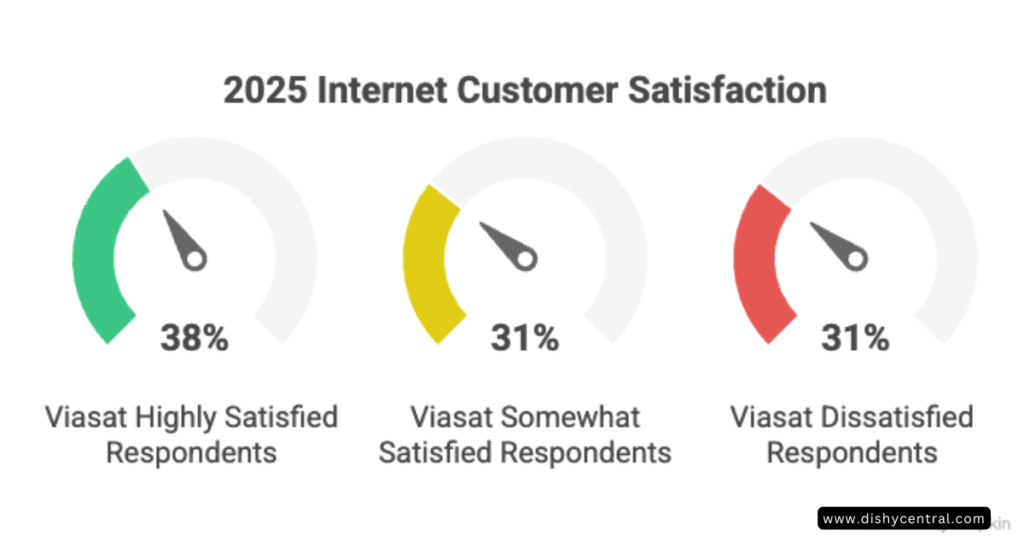
- Customer satisfaction is mixed (38% highly satisfied, 31% dissatisfied)
- Equipment lease adds $15/month or $300 upfront purchase
- Professional installation required ($0-$300 based on credit)
What Is Viasat Internet?
Viasat is a satellite internet provider that delivers broadband service to homes across all 50 states, including rural areas where cable and fiber connections aren’t available. Unlike the traditional internet that relies on underground cables, Viasat beams internet signals from geostationary satellites orbiting 22,000 miles above Earth.
The company operates a fleet of satellites, including the newer ViaSat-3 series, designed to provide faster speeds and better coverage. While this technology enables internet access virtually anywhere with a clear view of the southern sky, it comes with inherent limitations that affect performance.
How Satellite Internet Works
When you request a webpage or stream a video, your signal travels from your home’s satellite dish up to the Viasat satellite, then down to a ground station, across the internet, and back again. This round-trip journey of over 44,000 miles creates what’s called latency, the delay between your action and the response.
That’s why satellite internet feels slower than cable or fiber, even when download speeds look similar on paper. The physics of distance simply can’t be overcome with current geostationary satellite technology. Viasat customers typically experience latency around 600-700 milliseconds, compared to 20-40 ms with cable or DSL connections.
This high latency makes real-time applications challenging. If you’re hoping to use Viasat for competitive gaming, video conferencing, or VoIP calls, you might find yourself frustrated by the noticeable lag.
| Related: How Does Starlink Work: A Complete Technical Breakdown
Viasat Plans and Pricing Overview
In early 2024, Viasat simplified its offerings dramatically. Gone are the days of choosing between Bronze 12, Silver 25, Gold 30, and Platinum 100 plans with confusing data allowances. Now, Viasat offers primarily two plan options that vary by location.
Viasat Unleashed Plan
The Viasat Unleashed plan is the company’s flagship offering designed to compete with newer satellite providers. Here’s what you need to know:
Monthly Price: $99.99-$129.99 (varies by location)
Download Speeds: 25-150 Mbps (location dependent)
Upload Speeds: 3 Mbps
Data Policy: Unlimited with soft cap at 850GB
Contract: No contract required
The catch? Your actual speeds depend entirely on where you live. Some Viasat customers report receiving speeds closer to 150 Mbps during off-peak hours, while others in more congested areas struggle to get above 50 Mbps during peak evening hours when everyone’s streaming.
One Viasat customer from North Carolina shared: “Viasat was very reliable, and I rarely had any issues during the day. But come 7 PM, speeds would drop significantly.” This experience reflects what many users report: decent performance during business hours but frustrating slowdowns when you actually want to relax and watch Netflix.
Viasat Essentials Plan
The Essentials plan is Viasat’s budget option, available in select areas:
Monthly Price: $69.99 (promotional rate for first 3 months, then increases)
Download Speeds: Up to 150 Mbps
High-Speed Data: 150 GB per month
Standard Data: Unlimited (throttled speeds after 150GB)
Contract: 12-month commitment
While the Essentials plan offers a lower entry price, the 12-month contract and limited high-speed data make it less flexible than Unleashed. For most households that stream regularly or work from home, 150GB won’t last the month. To put this in perspective, streaming HD video uses about 3GB per hour—meaning you could burn through your high-speed allotment in just 50 hours of Netflix.
Additional Costs to Consider
Viasat’s advertised monthly price isn’t the full story. Here are the additional fees:
Equipment Lease: $15/month or $300 one-time purchase
Installation Fee: $0-$300 (based on credit qualification)
Taxes and Surcharges: Varies by location
A technician must install your Viasat service—self-installation isn’t an option. Professional installation typically takes 3-5 business days in most areas, though rural locations may wait up to 10 days.
| Related: Viasat vs. Starlink: Which Satellite Internet Provider Is Best?
Understanding Viasat’s Data Policies: What “Unlimited” Really Means
Let’s address the elephant in the room: Viasat markets “unlimited data,” but it’s not truly unlimited in the way you might expect with cable or fiber internet. Here’s how their data management actually works.
Deprioritization and Throttling
With the Viasat Unleashed plan, you get unlimited high-speed data up to approximately 850GB per month. Once you cross that threshold, Viasat may deprioritize your connection during peak network congestion hours, typically evenings and weekends.
What does deprioritization mean in practice? During busy periods, your speeds could slow significantly—potentially dropping from 100 Mbps to 5-15 Mbps. For casual browsing and email, this might be manageable. But streaming HD video or downloading large files becomes frustratingly slow.
Understanding “Bonus Zones” and Free Data Hours
Viasat offers a feature called “Free Zone” or bonus data hours, typically running from 3 AM to 6 AM. During these hours, your data usage doesn’t count toward your monthly allotment. This can be helpful if you’re willing to schedule large downloads overnight or set your streaming devices to download content during these windows.
However, let’s be honest—most people want to use their internet when they’re actually awake. If you work a traditional schedule, you’re unlikely to benefit much from 3 AM bonus hours.
How 850GB Compares
Is 850GB enough for your household? Here’s what typical activities consume:
- HD streaming: 3 GB per hour (Netflix, Hulu)
- 4K streaming: 7 GB per hour
- Video conferencing: 1-2 GB per hour (Zoom, Teams)
- Online gaming: 40-300 MB per hour (game dependent)
- Music streaming: 150 MB per hour (Spotify, Apple Music)
- Web browsing: 60 MB per hour
A household with two adults and two teenagers streaming regularly could easily exceed 850GB. Four hours of evening streaming per day equals about 360GB monthly—before considering work-from-home video calls, gaming, or social media usage.
Contract Requirements and Early Termination Fees
One area where Viasat has significantly improved is flexibility. The Unleashed plan requires no contract, meaning you can cancel anytime without penalty. This is a major departure from Viasat’s previous model that locked customers into 24-month agreements.
However, the Essentials plan still requires a 12-month commitment. If you cancel early, you’ll face early termination fees that can add up quickly.
The Contract Trap to Avoid
Before 2024, Viasat was notorious for aggressive contract enforcement. Customers who tried to cancel were hit with hefty early termination fees—sometimes $300-$500, depending on how much time remained on their contract. Internet forums are filled with complaints from frustrated Viasat customers who felt trapped.
One reviewer on the Better Business Bureau wrote: “I called to cancel four years ago and was assured it was cancelled. Just discovered they’ve been charging me this entire time!” While this is an extreme case, it highlights the importance of getting cancellation confirmation in writing.
Equipment Return Policy
When you cancel Viasat service, you must return all equipment within 30 days using the prepaid shipping label they provide. The satellite dish itself typically stays mounted on your roof—removing it is your responsibility if desired. Viasat only wants the modem and any indoor equipment returned.
Fail to return the equipment, and you’ll be charged an unreturned equipment fee of approximately $300. Set a calendar reminder to ensure you send everything back promptly.
| Related: Is Starlink Worth It? An In-Depth Guide for Rural & Remote Internet
Real Customer Reviews: The Good, Bad, and Ugly
I’ve analyzed hundreds of Viasat customer reviews from multiple sources to give you an unfiltered look at what real users experience. The results are decidedly mixed.
What Customers Like About Viasat
Availability: The number one positive across reviews is simply that Viasat service reaches areas where no other internet provider operates. For many rural homeowners, it’s Viasat or nothing—and having some internet beats having none.
Improved from Previous Plans: Customers who’ve used Viasat for years note that the Unleashed plan represents a significant upgrade from the older Choice plans. No hard data caps and slightly better speeds make a difference.
Customer Service Responsiveness: Viasat has an A+ rating with the Better Business Bureau due to their responsiveness to complaints. When issues arise, they generally work to address them—though resolution quality varies.
What Frustrates Viasat Customers
Inconsistent Speeds: This is the most common complaint. Advertised speeds of “up to 150 Mbps” rarely materialize in real-world usage. Many customers report speeds varying wildly throughout the day, with significant slowdowns during peak hours.
One Texas customer wrote: “Viasat changes your full speed potential based on peak hours. I’ve never heard of a home internet service that throttles your speed during certain times of day. It’s unusable between 6-10 PM.”
High Latency Issues: Gamers and remote workers are particularly vocal about latency problems. The 600+ millisecond delay makes video conferencing awkward and online gaming nearly impossible.
A former Viasat customer in North Carolina shared: “Speeds were good, but the latency was bad—800ms plus. It was not an ISP to stream anything without constant buffering.”
Weather Interruptions: Satellite internet is inherently susceptible to weather interference. Heavy rain, snow, or even thick clouds can degrade or completely interrupt your connection. This isn’t unique to Viasat—it’s a limitation of all geostationary satellite internet.
Billing Issues: Multiple reviewers report problems with billing, including being charged after cancellation, unexpected price increases, and difficulty getting refunds. Always monitor your credit card statements carefully and keep detailed records of any service changes.
Customer Satisfaction Statistics
According to a 2025 Internet Customer Satisfaction Survey:
- 38% of Viasat respondents were highly satisfied
- 31% were somewhat satisfied
- 31% were dissatisfied with their internet connection
These virtually even splits reflect the unpredictable nature of satellite internet service. Your experience with Viasat will likely depend heavily on your location, network congestion in your area, and your expectations going in.
Viasat vs Other Satellite Internet Providers
How does Viasat stack up against its primary competitors? Let’s break down the key comparisons.
Viasat vs HughesNet
HughesNet is Viasat’s closest traditional competitor, also using geostationary satellites:
Speed: Viasat offers faster speeds (up to 150 Mbps vs HughesNet’s 100 Mbps)
Data: Viasat Unleashed provides 850GB before throttling; HughesNet caps priority data at 100-200GB
Price: HughesNet starts at $49.99/month (cheaper than Viasat)
Contract: HughesNet requires 24-month contracts; Viasat Unleashed has no contract
Latency: Both suffer from similar high latency (600-700ms)
The Verdict: Viasat offers faster speeds and more data, making it the better value if you can afford the higher monthly price. HughesNet’s mandatory 2-year contract is a significant drawback compared to Viasat’s flexibility.
Viasat vs Starlink
This comparison reveals why many satellite internet customers are making the switch:
Technology: Starlink uses low-Earth orbit satellites (340 miles up) vs Viasat’s geostationary satellites (22,000 miles up)
Speed: Starlink delivers 50-220 Mbps typical speeds; Viasat provides 25-150 Mbps
Latency: Starlink achieves 25-60ms latency; Viasat sits at 600-700ms
Data: Both offer unlimited data with deprioritization policies
Price: Starlink costs $120/month; Viasat ranges $99-129/month
Equipment: Starlink requires $599 upfront; Viasat charges $15/month lease or $300 purchase
Contract: Neither requires a contract
Installation: Starlink allows DIY setup; Viasat requires professional installation
The Verdict: Starlink’s low-Earth orbit technology provides dramatically lower latency—a game-changer for video calls, gaming, and responsive browsing. While Starlink has higher upfront costs, the superior performance makes it worth considering seriously.
Real-world user experiences support this assessment. In a 2025 survey, 94% of Starlink customers reported the service met or exceeded expectations—far above Viasat’s mixed reviews. Starlink users consistently praise speeds that “feel like DSL or cable” for everyday use, something Viasat customers rarely report.
One customer who switched from Viasat to Starlink explained: “With Starlink, I’m able to do everything I need: online gaming and video conferencing. With Viasat, I constantly struggled during evening hours and gave up trying to game entirely.”
Why Location Still Matters
The best satellite provider for you depends partly on what’s available in your specific area. Starlink, while expanding rapidly, may still have waitlists in some regions. Viasat is available virtually everywhere in the US today.
However, if Starlink is available at your address, most experts recommend it over traditional geostationary satellite options like Viasat and HughesNet. The technology difference is simply too significant to ignore.
Contract Terms, Fees, and Fine Print You Must Know
Installation Costs and Process
Viasat requires professional installation by a certified technician. The installation fee ranges from $0 to $300, determined by a soft credit check. Customers with good credit typically qualify for free installation, while others pay the full fee upfront.
The installer will mount a satellite dish on your roof or property (requires clear view of the southern sky), run cable into your home, and set up the modem/router. Installation usually takes 2-4 hours. The 90-day warranty covers defective hardware issues.
Monthly Equipment Fees
You have two options for equipment:
Lease: $15/month added to your bill
Purchase: $300 one-time fee
The break-even point is 20 months. If you plan to keep Viasat service for less than two years, leasing makes more financial sense. Purchase the equipment if you’re committed long-term.
Hidden Fees and Charges
Taxes and Surcharges: Your actual monthly bill will exceed the advertised price due to taxes and surcharges that vary by state and municipality. Budget an extra 10-15% above the base price.
Non-Standard Installation: If your property requires special mounting, trenching, or additional equipment, you may face extra charges. Get a written quote before installation begins.
Service Calls: Technical support visits after the initial installation may incur fees, typically $95-$125 per visit.
The 2025 Pricing Structure
Viasat currently offers a promotional discount of $20-$30 off per month for the first three months to new customers. You must mention this offer when ordering by phone. After the promotional period ends, your bill increases to the standard rate.
Be prepared for your bill to jump after month three. This price increase catches many customers off guard who budgeted based on the promotional pricing.
Who Should (and Shouldn’t) Consider Viasat?
Viasat Makes Sense If You:
Live in a rural area with no other options. If cable, fiber, 5G home internet, and even DSL aren’t available, Viasat provides basic internet connectivity when the alternative is nothing.
Have light to moderate usage needs. If you primarily browse websites, check email, and stream occasionally in standard definition, Viasat can handle these tasks adequately.
Can’t access Starlink yet. In areas where Starlink has waitlists or isn’t yet available, Viasat offers immediate installation and service.
Need internet at a vacation or seasonal property. The no-contract Unleashed plan allows you to activate service when needed without long-term commitment.
Skip Viasat If You:
Work from home with video calls. The high latency makes video conferencing frustrating, with noticeable delays and choppy connections. Your professional reputation may suffer from connection issues during important client calls.
Are a serious gamer. Online gaming requires low latency for responsive gameplay. Viasat’s 600+ ms latency makes competitive gaming essentially impossible and even casual gaming frustrating.
Stream 4K content regularly. While Viasat can technically handle 4K streaming, it quickly burns through your data allowance and often results in buffering during peak hours.
Have Starlink available. If you can get Starlink service at your address—even with a waitlist—it’s worth waiting for. The performance difference is substantial, particularly for latency-dependent activities.
Have access to 5G home internet. Providers like T-Mobile and Verizon offer 5G home internet in many rural areas now, often with better speeds, lower latency, and more competitive pricing than satellite options.
Alternatives Worth Considering in 2025
Before committing to Viasat, explore these alternatives:
Starlink
As discussed extensively above, Starlink represents the future of satellite internet. Low-Earth orbit technology delivers cable-like latency and faster, more consistent speeds. The $599 upfront cost is significant, but for households with multiple users or higher bandwidth needs, it pays for itself in better performance.
5G Home Internet
T-Mobile Home Internet and Verizon 5G Home Internet have expanded rapidly into rural markets. If you have decent cellular coverage, check if either provider offers home internet at your address. Pricing starts around $50-70/month with no data caps and latency under 50ms—far superior to any geostationary satellite option.
Fixed Wireless Providers
Local wireless internet service providers (WISPs) operate in many rural areas using terrestrial radio towers. While coverage is spotty, they often provide better speeds and lower latency than satellite at competitive prices. Search for WISPs in your area—you might be surprised what’s available.
DSL (If Available)
Even slow DSL from AT&T or CenturyLink may provide a better experience than satellite for latency-sensitive activities. A 10 Mbps DSL connection with 30ms latency will feel more responsive than 100 Mbps satellite with 600ms latency for browsing and video calls.
Mobile Hotspots
For light users, consider an unlimited mobile hotspot plan from a cellular carrier. While carriers may throttle speeds after 15-50GB depending on the plan, it can serve as a more affordable backup or primary option for basic needs.
Frequently Asked Questions
Is Viasat a good internet provider?
Viasat is adequate for basic internet needs in rural areas without other options. It provides nationwide coverage and has improved with its no-contract Unleashed plan. However, high latency, variable speeds, and peak-hour throttling make it frustrating for demanding users. If alternatives like Starlink or 5G home internet are available, most users will have a better experience with those options.
How fast is Viasat internet really?
Advertised speeds reach up to 150 Mbps, but actual speeds vary dramatically by location and time of day. Most customers report 25-75 Mbps during peak evening hours, with better speeds possible during off-peak times. Upload speeds remain consistently slow at around 3 Mbps regardless of plan.
Can you game on Viasat internet?
Online gaming on Viasat is extremely challenging due to high latency (600+ ms). Turn-based games and some casual titles may work, but any game requiring quick reactions or real-time coordination will be frustratingly laggy. Competitive gaming is essentially impossible on geostationary satellite internet.
Does Viasat work for streaming Netflix and YouTube?
Viasat can stream video, but the experience varies. Standard definition (SD) streaming generally works well. High definition (HD) streaming is possible but may buffer during peak hours or after you exceed your data threshold. 4K streaming uses too much data and bandwidth to be practical for regular use.
How much does Viasat internet really cost?
Expect to pay $115-145/month total when you factor in the base plan ($99-129), equipment lease ($15), taxes, and surcharges. Installation adds $0-300 upfront depending on your credit. The advertised promotional rates of $69-99 only last three months before increasing.
Can I cancel Viasat without penalty?
The Viasat Unleashed plan has no contract and can be cancelled anytime without early termination fees. However, you must return all equipment within 30 days or face a $300 unreturned equipment fee. The Essentials plan requires a 12-month contract and charges early termination fees if you cancel prematurely.
Is Viasat better than HughesNet?
Viasat offers faster speeds (up to 150 Mbps vs 100 Mbps) and more high-speed data (850GB vs 100-200GB) compared to HughesNet. Viasat’s no-contract option also provides more flexibility than HughesNet’s mandatory 2-year agreement. However, HughesNet’s lower starting price ($49.99) may appeal to budget-conscious users with light needs.
Why is my Viasat internet so slow?
Slow Viasat speeds typically result from: network congestion during peak hours (6-11 PM), exceeding your 850GB data threshold triggering deprioritization, weather interference affecting satellite signals, or living in an area with limited capacity. The inherent high latency of satellite internet also makes connections feel slower even when download speeds are adequate.
Does weather affect Viasat’s internet?
Yes, significantly. Heavy rain, snow, or thick cloud cover can degrade or completely interrupt your Viasat connection. This “rain fade” is a fundamental limitation of satellite internet technology. Even light rain can cause speeds to drop or increase latency beyond normal levels.
What’s better: Viasat or Starlink?
Starlink is objectively better for most users due to dramatically lower latency (25-60ms vs 600ms), faster speeds (50-220 Mbps vs 25-150 Mbps), and more consistent performance. Starlink costs more upfront ($599 equipment) but only $120/month versus Viasat’s $99-129/month plus equipment fees. Unless Starlink is unavailable in your area, it’s the superior choice.
The Bottom Line: Is Viasat Worth It in 2025?
Viasat internet service occupies an increasingly narrow niche in 2025. It’s a viable option only if you live in a rural area where better alternatives aren’t available. The service has improved with the Unleashed plan’s no-contract flexibility and higher data allowances, but fundamental limitations of geostationary satellite technology hold it back.
For households with basic internet needs—primarily browsing, email, and occasional standard-definition streaming—Viasat can work adequately. The key is setting realistic expectations about speed variability, high latency, and performance degradation during peak hours.
However, if you have access to Starlink, 5G home internet, or even DSL, those options will almost certainly provide a better experience for similar or lower monthly costs. Starlink in particular represents a generational leap forward in satellite internet, solving the latency problems that plague Viasat and HughesNet.
Before signing up for Viasat service:
- Check if Starlink is available at your exact address, even if there’s a waiting period
- Verify 5G home internet availability from T-Mobile or Verizon
- Search for local WISPs (wireless internet service providers) in your area
- Calculate your actual monthly cost including equipment, taxes, and fees—not just the advertised rate
- Assess your usage honestly—if you need low latency for work or gaming, satellite won’t meet your needs
The satellite internet landscape is evolving rapidly. What made sense even two years ago may no longer be your best option. Do your homework, read current customer reviews, and choose the technology that actually fits your usage patterns, not just what’s available first